
Childhood Seeds of Curiosity
Some careers are chosen late. Mine, however, began forming quietly in the corners of my childhood – through maps, flags, and forgotten histories.
The careers or interests people ultimately choose are often shaped from childhood. My passion for history, for example, dates back to my high school years, if not earlier. While some children are outgoing from an early age, I was rather introverted, which actually helped me discover my interests. Ever since childhood, I’ve been fascinated by national flags, maps, and, later on, world history. Despite having many subjects in high school, history always captivated me the most. A significant reason for my love of history was my enduring interest in the topic, fostered since childhood. Another key factor was my high school history teacher, who was passionate about her profession and encouraged my class participation. These influences played a significant role in my decision to study history at university during my second year of high school. The first book I read in my first year of high school related to history was William McNeill’s “World History”.1 After the university entrance exam in Turkey, when the preference period came, all my preferences were for history departments at different universities. Then making my choices, I began studying history at a university in the city where I was born.
Undergraduate Years: Choosing My Academic Identity
As soon as I entered the history department, I decided to pursue an academic career. I also chose my specialisation early on. I planned to complete a postgraduate degree in Classics, as it is known in the Western world, and to obtain a university position in Greek and Roman studies. For this reason, I began my academic journey with the works of Homer, said to have been born in Izmir (Smyrna), Bornova and Herodotus, known as the Father of History. During my undergraduate years, I began reading Greek and Latin texts from the Loeb Classical Library series and, to better understand them, I learned Latin and Greek. After successfully completing courses in Aegean and Greek history and Roman history, I wrote a thesis on the Celts. The life of the Celts and their relationship with the Romans had always fascinated me, and I even considered continuing my studies in the United Kingdom. I attempted this, but my plan did not come to fruition. For this reason, after completing my undergraduate degree, I moved to Istanbul to pursue graduate studies and continued my work there. Although I conducted successful research on the Collegium Pontificium and the city-states of Lycia during my master’s studies in Istanbul, I unfortunately had to leave Istanbul because I was unable to reach an agreement with my advisor on the topic I wanted to work on.
A New Direction: Medieval Studies and Crete
After facing a challenging period in my academic career, I restarted my master’s studies in Izmir, switched fields for my doctorate, and began focusing on the Middle Ages. For my MA thesis, I explored the relationships among the Venetians, Byzantines, and Turks in the Aegean Islands. During this research, I came to understand the critical role of Crete – acquired by Venice after the Fourth Crusade in 1204- played in establishing the Venetian Republic as the leading power in the Eastern Mediterranean. And actually, at that point, my doctoral thesis topic and the field I would work in after my doctorate had been decided. This was a turning point for me. Working on the island of Crete under Venetian rule for the first time in Turkey was both challenging and incredibly rewarding. One reason I studied Crete was that my great-grandparents had come to Izmir from Candia and Chania, and I was curious about the Greek language that resulted from this. I wanted to study the island of Crete, but to do so, I absolutely had to gain access to the Venetian State Archives.
Venice: The Turning Point
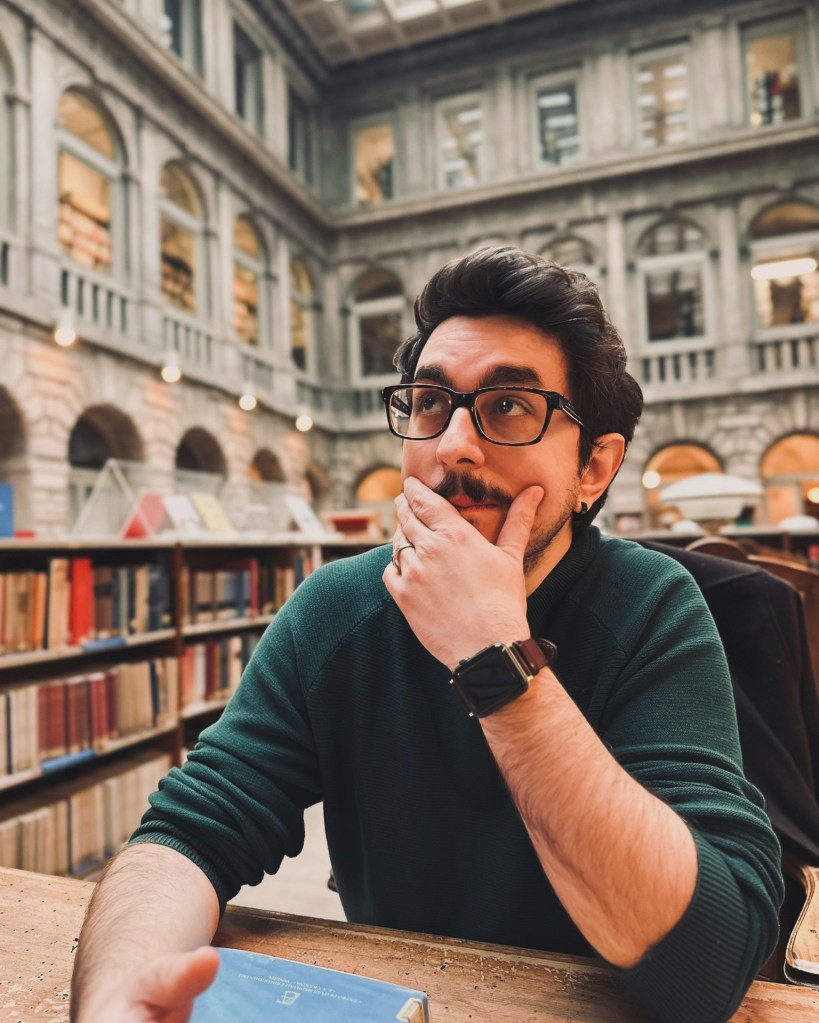
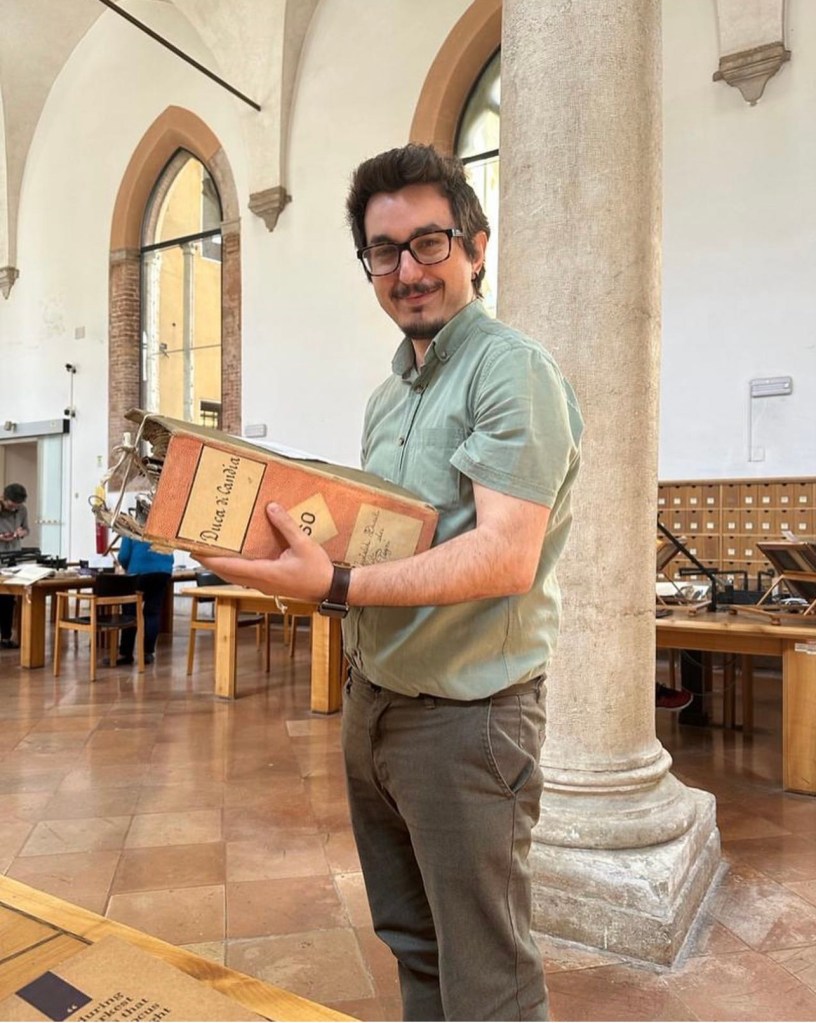
Fortunately, I was lucky enough to secure an opportunity to work as a visiting researcher at Ca’ Foscari University in Venice between 2023 and 2024, alongside my dear historian wife, Dr. Hülya Çiçek Kaymakçı, who completed her doctoral research on Crete under Venetian rule in the Early Modern period. In addition to Venice’s excellent and comprehensive libraries, such as the Marciana and Correr Museum, we spent our time very productively with the documents in the Venice State Archives. After returning to Turkey, we successfully completed our dissertation. After completing our doctorates, we continue to think and work on various articles and projects through the Venetian Crete.
As a result, my passion for history, which began in my childhood, became my profession. I pursue this career with ever-growing enthusiasm. Although I have faced challenges and setbacks along the way, I have generally achieved my goals, and I continue to work towards my future ambitions.
In conclusion, I would like to share this advice with our readers: If you love what you do and have genuine passion for it, your work will never feel like a burden. In the end, you will find true happiness and fulfillment.
- William McNeill, A World History, Oxford University Press, New York 1979. ↩︎

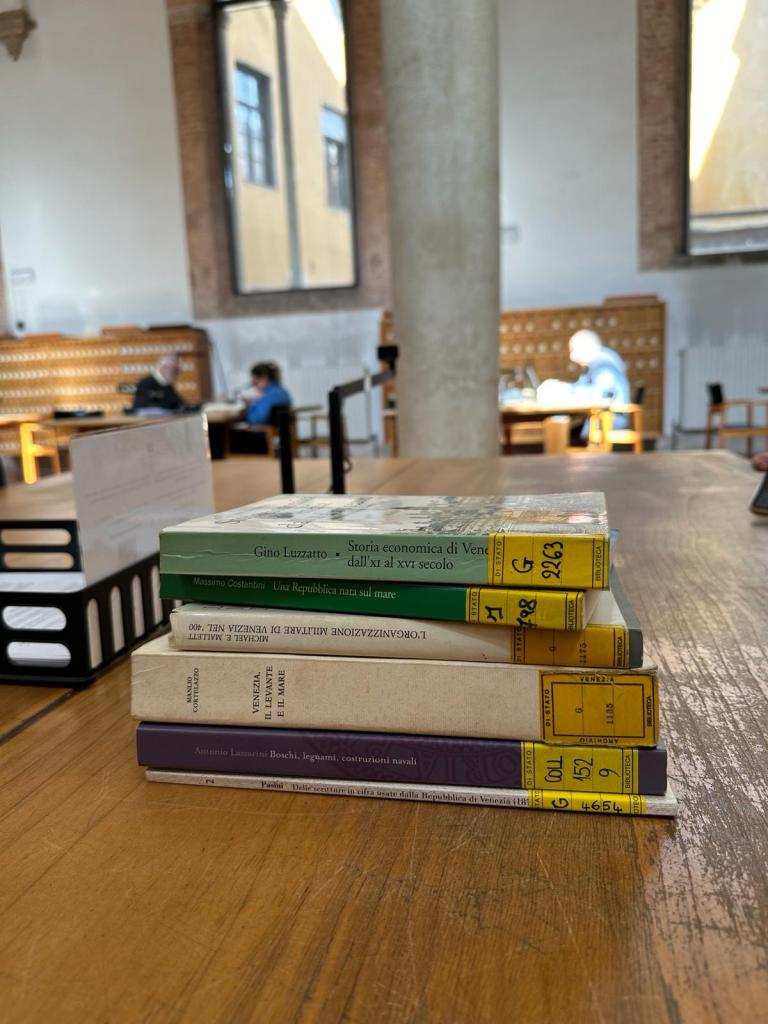
Some books from the Archive
 VenetianCrete
Yorum bırakın