
Hello Everyone!
The Journey Back to Venice
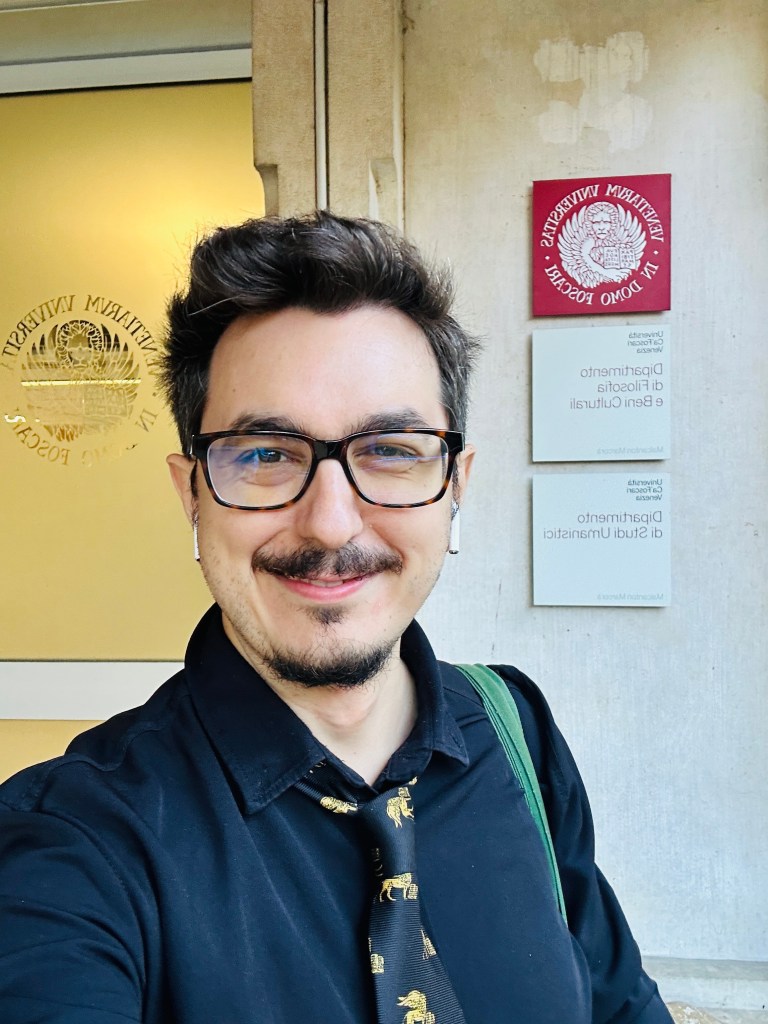
I’m delighted to share the beginning of a new chapter in my academic journey. I started my new academic position at Ca’ Foscari University Venice on 2 August 2026 as a Marie Skłodowska-Curie postdoctoral fellow. Returning to Venice three years after my previous research stay feels like both a homecoming and the fulfilment of a long-held aspiration. I will conduct an MSCA Postdoctoral project at Ca’ Foscari University of Venice until August 2028. But how did this journey begin? I conducted a project at Ca’Foscari University of Venice between 2023 and 2024, and after completing it, I returned to Turkey. Then, I finished my PhD on Medieval Venetian Crete in 2024. Although earning a PhD and writing a dissertation on Medieval Venetian Crete made me very happy, I wanted to return to Venice. For this reason, I spoke with my supervisor, contacted Ca’ Foscari University’s international staff, and shared my research proposal topic for the Marie Skłodowska-Curie postdoctoral fellowship. After Ca’ Foscari University of Venice agreed to host my MSCA application, I attended an online webinar organised by the university and began preparing my proposal. Although writing an MSCA project is a really hard process, I was able to navigate it thanks to invaluable guidance from Ca’ Foscari University’s international staff. After spending about five months drafting the proposal, I submitted it in September 2025 and waited until February 2026. On the morning of 9th February, my dream of returning to Venice had finally become a reality.
Why the Little Ice Age?
Once the administrative formalities were complete, I was finally ready to begin my research in Venice. However, before I describe this two-month period, I would like to briefly explain why I chose this project topic. To that end, I will walk you through the process after I was awarded my PhD. As I continued examining archival documents and chronicles concerning Venetian Crete, I began noticing references to unusual weather conditions, agricultural difficulties, and environmental challenges. These observations encouraged me to consider how climatic variability might have affected the economic and social life of Venice and its most important eastern Mediterranean colony. At the same time, the presence of researchers from different fields at the EU project-writing seminars I attended at my university broadened my horizons, and I thought, “Why not develop a project that brings together several academic disciplines?” Then I came up with the idea for a project that would bring together history, digital humanities, and climate sciences. Furthermore, by focusing on the Little Ice Age, my project explores historical climate variability and its socio-economic consequences, offering a historical perspective on environmental challenges that remain highly relevant today. For this reason, one of my greatest aspirations at the conclusion of my project is to contribute not only to historical research but also to today’s ongoing climate research. By examining the socio-economic consequences of climatic variability in Venice and Venetian Crete, my project aims to explore how societies responded to environmental challenges during the Little Ice Age. Bringing together archival evidence, digital methods, and climate research, I hope to contribute to a better understanding of the relationship between climate and society in the premodern Mediterranean.
My First Two Months at Ca’Foscari
So, what have I been doing in my academic role at Ca’Foscari University of Venice over the first few months? First, as I mentioned in my project timetable, I began my research at the Venetian State Archive (Archivio di Stato di Venezia, which I consider one of the world’s finest archives. Over the past two months, I continued examining records from archival series such as the Senato Mar, the Provveditore alle Biave, the Senato Dispacci Provveditori da terra e da mar e altre cariche, and other offices, which contain information on the climate of Venice and Crete. In addition to the archive, I conducted research on certain days at the Faculty of Humanities and the wonderful library of Ca’ Foscari University of Venice. Amid all this hard work, I also took the opportunity to rediscover Venice, which I had missed so much. Finally, I submitted abstracts for the conferences I plan to attend next year in Salzburg and Crete.
These first few months have been filled with archival discoveries, new ideas, and the joy of returning to Venice. I look forward to sharing more about my research, academic experiences, and life in this remarkable city as my MSCA journey continues.
Until the next chapter of my MSCA adventure!


Bir Cevap Yazın